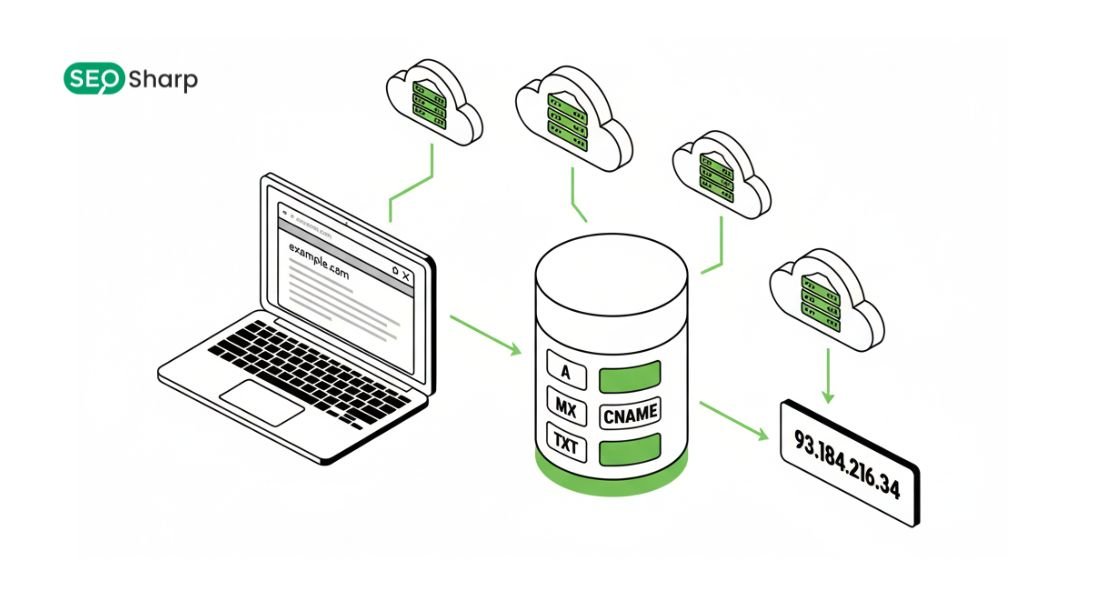
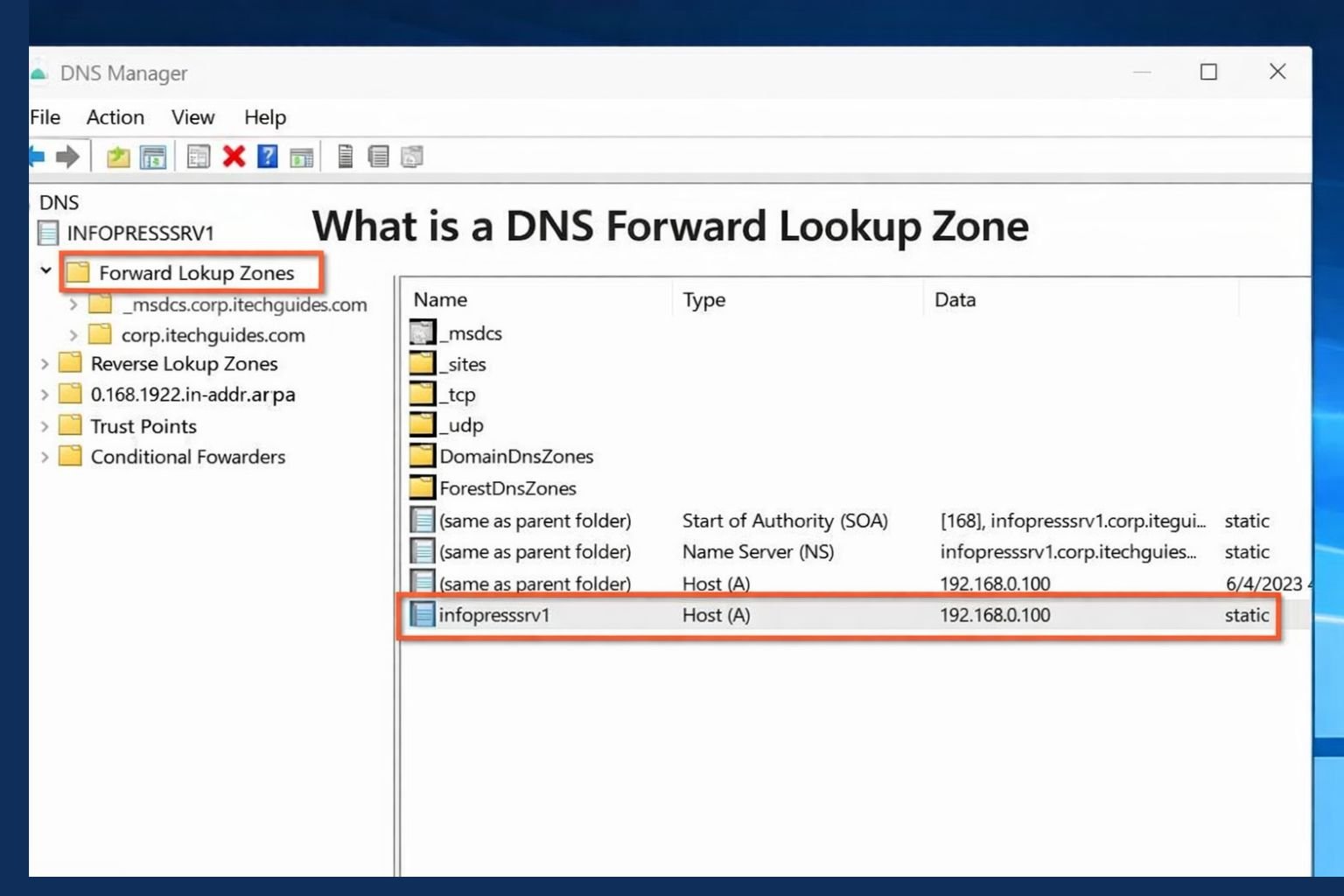
A DNS forward lookup zone is a core component of how the internet and internal networks operate. To truly understand What is a DNS Forward Lookup Zone, it is important to know how domain names translate into IP addresses behind the scenes. It connects human friendly domain names with machine readable IP addresses making communication between users and servers possible.
In simple terms it answers the question: “Which IP address belongs to this domain name?” Understanding this concept matters not only for network administrators but also for developers, system engineers and anyone who works with websites servers or DNS tools.
In this article you will learn what is a DNS forward lookup zone is, how DNS forward lookups work step by step, how they differ from reverse lookups and why they are critical for performance reliability and security.
What Is a DNS Forward Lookup Zone?
When someone asks What Is a DNS Forward Lookup Zone, the most accurate answer is that it is the place where DNS servers look first when they need to convert a domain name into an IP address.
A DNS forward lookup zone is a DNS database that stores records mapping domain names to IP addresses. Its primary purpose is to resolve a hostname into an IP address so computers can communicate with each other over a network.
Humans prefer readable names like example.com but machines require numerical addresses such as 192.0.2.1 or IPv6 equivalents. The forward lookup zone acts as the translator between these two worlds.
When someone asks what is a DNS forward lookup zone, the most accurate answer is that it is the place where DNS servers look first when they need to convert a domain name into an IP address.
These zones contain resource records such as A records for IPv4 addresses AAAA records for IPv6 addresses CNAME records for aliases and other supporting records that help DNS function smoothly.
Without a forward lookup zone users would have to remember IP addresses instead of names which would make the internet nearly impossible to use at scale.
Why Do DNS Forward Lookup Zones So Important?
Understanding What Is a DNS Forward Lookup Zone helps explain why DNS performance issues can directly affect website loading speed and application reliability. DNS forward lookup zones exist because of a basic difference between humans and computers.
People think in words and names while computers think in numbers. Forward lookups bridge that gap. Every time you visit a website, connect to a mail server or access a network resource a forward lookup happens silently in the background.
Forward lookup zones also play a major role in network stability and performance. When DNS resolves names quickly and accurately applications load faster and connections feel seamless.
When something goes wrong inside the forward lookup zone users may experience delays, errors or complete failures. Many performance related problems including issues discussed in guides like How to Fix Slow DNS Lookup often trace back to misconfigured or overloaded forward lookup zones.
Beyond performance, forward lookup zones also support security and manageability. Administrators can control which domain names point to which servers redirect traffic during maintenance and manage internal resources without exposing raw IP addresses to users.
How DNS Forward Lookup Works Step by Step?
A DNS forward lookup begins the moment a user or application tries to access a domain name. The process starts locally and moves outward until it finds the correct answer. This process clearly demonstrates what is a DNS forward lookup zone and how it functions as the backbone of name resolution.
First the client checks its local cache to see if it already knows the IP address. If it does not it sends a DNS query to a resolver which is usually provided by an ISP or configured inside an organization.
The resolver then checks its own cache. If the answer is still not available it contacts authoritative DNS servers responsible for the domain. Those authoritative servers consult their forward lookup zone to locate the matching record and return the IP address.
The resolver sends this information back to the client and the client can finally connect to the destination server. This entire process usually happens in milliseconds which is why DNS feels instant.
Understanding this flow also helps explain how DNS Resolve Command utilities work when troubleshooting resolution issues because they follow the same logical steps behind the scenes.
DNS Forward Lookup Zone vs Reverse Lookup Zone
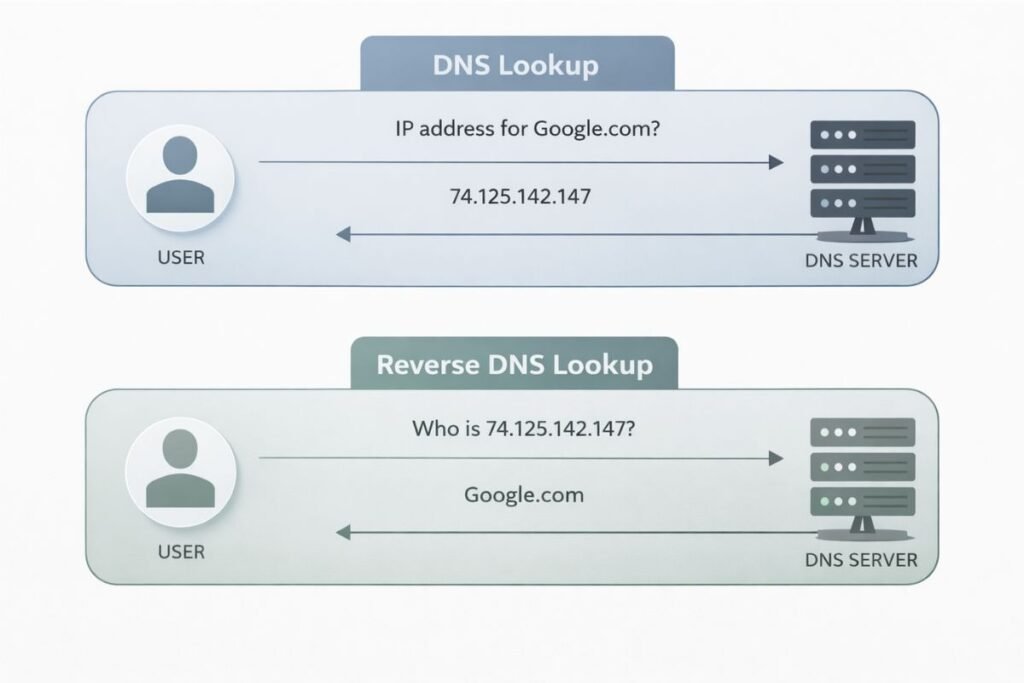
To fully understand DNS it helps to compare forward and reverse lookups. A forward lookup resolves a domain name into an IP address. A reverse lookup does the opposite by resolving an IP address back into a domain name.
While both processes rely on DNS they serve different purposes and use different zone types.Forward lookup zones support everyday activities like browsing websites and accessing network services. Reverse lookups focus more on verification logging and security.
Administrators often rely on reverse lookups to validate incoming connections, trace activity and troubleshoot email delivery or authentication issues. Tools such as a Reverse DNS Lookup Command exist specifically to test and validate this reverse mapping.
Both forward and reverse lookup zones work together to create a trustworthy and well-managed DNS environment. In larger networks administrators often configure both types carefully to maintain consistency and reliability.
Key DNS Records Found in a Forward Lookup Zone
These records collectively explain what is a DNS forward lookup zone and why it supports modern internet infrastructure. A forward lookup zone contains multiple types of DNS records each serving a specific purpose. The most common is the A record which maps a domain name to an IPv4 address.
For modern networks using IPv6 AAAA records perform the same function with IPv6 addresses. CNAME records allow one domain name to act as an alias for another which simplifies management when services move or change.
MX records guide email traffic while SRV records define services and ports for applications, a concept often explored in DNS SRV Lookup discussions. TXT records store text-based data which administrators often query using DNS TXT Lookup tools for verification and security purposes.
Together these records allow forward lookup zones to support complex infrastructures while keeping name resolution predictable and efficient.
Forward Lookup Zones in Internal and External Networks
Forward lookup zones exist in both public and private environments. On the public internet they help users reach websites APIs and cloud services. Inside organizations forward lookup zones support internal systems such as file servers databases and applications.
Internal forward lookup zones often remain invisible to the outside world. They allow employees to access resources using friendly names instead of IP addresses. Administrators can easily change server addresses without disrupting users because they only need to update the zone records.
External forward lookup zones focus more on availability redundancy and performance. They often integrate with load balancers and content delivery networks to distribute traffic efficiently across multiple servers.
Performance and Reliability Benefits of Forward Lookup Zones
Performance benefits clearly highlight what is a DNS forward lookup zone and why accurate configuration matters. Well-configured forward lookup zones directly impact network performance. When DNS responses are fast and accurate applications load quickly and users experience fewer interruptions.
Administrators can also use DNS to route traffic intelligently improving availability during outages or maintenance windows. Caching plays a critical role here.
By allowing resolvers and clients to store DNS answers temporarily forward lookup zones reduce repeated queries and lower overall load. This approach improves response times and helps networks scale efficiently.
When performance problems arise administrators often examine forward lookup zones first. Tools like Linux Lookup DNS utilities help verify whether records resolve correctly from different environments and operating systems.
Security Considerations in DNS Forward Lookup Zones
From a security standpoint, understanding What Is a DNS Forward Lookup Zone allows administrators to prevent misrouting and spoofing risks. By controlling which names resolve to which IP addresses administrators can limit exposure and prevent unauthorized access. Secure zone transfers access controls and monitoring help protect DNS data from tampering.
Forward lookup zones also support authentication and validation processes. Many security systems rely on consistent DNS resolution to verify services and endpoints. Misconfigured records can weaken security or create opportunities for attacks.
In enterprise environments administrators may temporarily restrict or disable DNS Lookup Cisco configurations during troubleshooting or security incidents demonstrating how tightly DNS integrates with network control.
Forward Lookup Zones and IPv6
To fully grasp What Is a DNS Forward Lookup Zone, it is helpful to compare forward and reverse DNS lookups. Even with IPv6 adoption, what is a DNS forward lookup zone remains conceptually the same. As networks transition from IPv4 to IPv6 forward lookup zones continue to evolve.
IPv6 introduces longer addresses and additional complexity but the core concept remains the same. AAAA records map domain names to IPv6 addresses and forward lookup zones store and serve these records just like their IPv4 counterparts.
Administrators must ensure consistency between IPv4 and IPv6 records to avoid resolution issues. Troubleshooting often involves checking both forward and reverse mappings especially when dealing with IPv6 Reverse DNS Lookup configurations in mixed environments.
Troubleshooting Common Forward Lookup Issues
Most DNS errors ultimately trace back to misunderstanding What Is a DNS Forward Lookup Zone or misconfiguring its records. Even small errors in a forward lookup zone can cause noticeable problems. Missing records, outdated IP addresses or incorrect configurations can lead to resolution failures.
Users may encounter browser errors or application timeouts when DNS fails to resolve names properly. Messages such as DNS Lookup Failed often indicate that a forward lookup zone is unreachable or misconfigured. Administrators typically respond by verifying records, testing resolution paths and checking server health.
Knowing how to locate authoritative servers, flush caches and confirm resolver settings becomes essential during troubleshooting. Questions like How to Find My DNS Server? often arise when diagnosing where resolution breaks down.
DNS Forward Lookup in Automation and Development
Automation workflows still rely on understanding what is a DNS forward lookup zone to function correctly. Developers and system engineers frequently interact with DNS forward lookups programmatically. Scripts and applications rely on DNS resolution to connect services dynamically.
Tools and libraries exist across platforms to perform forward lookups automatically. For example Python DNS Lookup libraries allow applications to resolve domain names during runtime making services more flexible and environment agnostic.
Power users may also rely on PowerShell DNS Lookup commands to automate checks and validations in Windows environments. These automated lookups still depend on properly configured forward lookup zones. Without accurate DNS data automation quickly breaks down.
Visualizing the DNS Forward Lookup Process
Visual diagrams are often used to teach What Is a DNS Forward Lookup Zone during training sessions. Understanding DNS becomes much easier when you visualize how queries flow from client to resolver to authoritative server. Many administrators rely on diagrams to explain this process during training or documentation.
A DNS Lookup Flow Diagram Labelled clearly shows each step involved in a forward lookup from user request to final response. Visual representations reinforce the idea that forward lookup zones sit at the center of DNS resolution.
Best Practices for Managing DNS Forward Lookup Zones
Best practices revolve around maintaining clarity around what is a DNS forward lookup zone and its records. Effective management of forward lookup zones requires consistency and regular maintenance. Administrators should review records frequently, remove obsolete entries and document changes.
Clear naming conventions reduce confusion and make troubleshooting faster. Redundancy also matters. Hosting forward lookup zones on multiple DNS servers ensures availability even if one server fails.
Monitoring and logging help detect anomalies early and maintain trust in the DNS system. Although best practices vary by environment the goal remains the same: keep forward lookup zones accurate, secure and easy to manage.
Conclusion
In short, What Is a DNS Forward Lookup Zone is not just a technical concept but the foundation of reliable DNS communication. DNS forward lookup zones form the foundation of how users and systems communicate across networks.
They translate familiar domain names into usable IP addresses enabling everything from simple web browsing to complex enterprise operations. A well-designed forward lookup zone improves performance, strengthens security and simplifies network management.
At seosharp we understand how critical DNS is for modern infrastructure. That’s why we provide a free DNS lookup tool along with in depth guides that help you not only check DNS records but also understand what those results actually mean.
If you want a simple way to explore DNS forward lookups while learning how to use them effectively, our tools and resources are designed to support you every step of the way.
FAQs
What is the main purpose of a DNS forward lookup zone?
The main purpose of a DNS forward lookup zone is to map domain names to IP addresses so computers can locate and communicate with servers using human-friendly names.
Can a forward lookup zone contain both IPv4 and IPv6 records?
Yes, a forward lookup zone can store A records for IPv4 and AAAA records for IPv6 allowing networks to support both addressing systems simultaneously.
Is a forward lookup zone required for internal networks?
Internal networks benefit greatly from forward lookup zones because they allow users and systems to access internal resources using names instead of IP addresses.
How often should forward lookup zones be maintained?
Administrators should review and update forward lookup zones regularly especially after infrastructure changes to prevent outdated or incorrect records.
What happens if a forward lookup zone is misconfigured?
A misconfigured forward lookup zone can cause resolution failures, slow performance and application errors affecting both users and services.