
DNS TXT Lookup is more than a way to view text based DNS records; it’s key to securing and optimizing your domain. TXT records help verify domain ownership, improve email deliverability with SPF, DKIM and DMARC and ensure reliable communication.
Many users struggle to interpret these records or use them effectively, which is why this guide walks you through everything step by step. Our tool provides instant, accurate results while showing practical ways to monitor and troubleshoot TXT records.
Whether you manage one domain or multiple sites, this guide and tool together give you full control and clarity. By the end, you’ll know exactly how to use your TXT records to boost security, email performance and domain reliability.
What Is DNS TXT Lookup and Why Does It Matter?
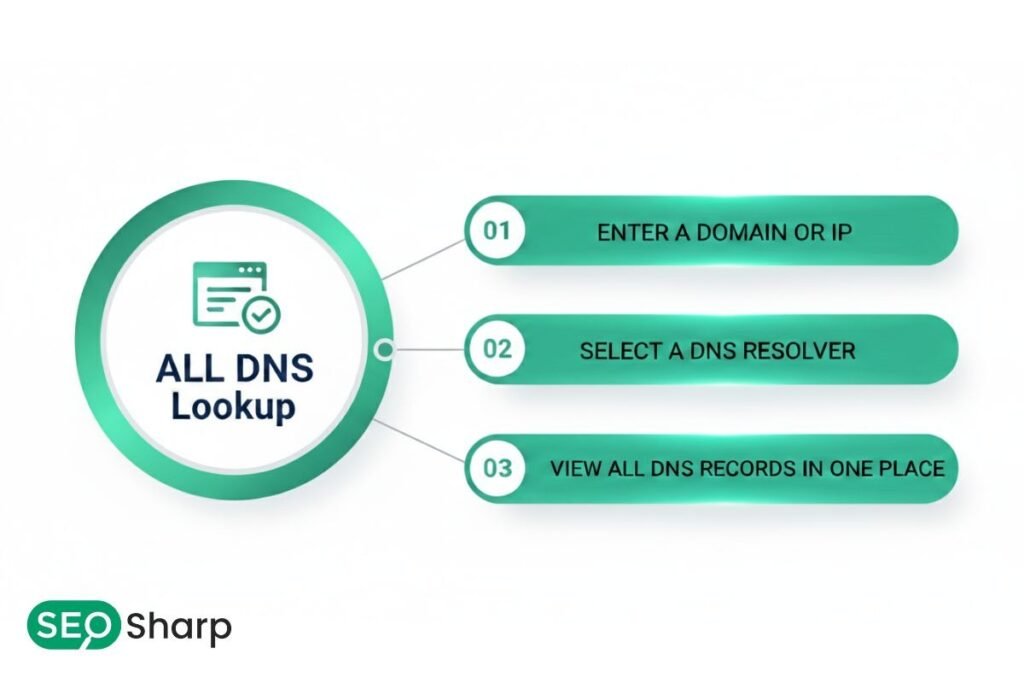
DNS TXT lookup is the process of retrieving TXT records from a domain’s DNS configuration to understand what instructions the domain is sharing with external systems.
TXT records are plain text entries stored in DNS that are commonly used for domain verification, email authentication and security policies. Unlike A or CNAME records that point traffic to servers TXT records communicate trust ownership and permissions.
When these records are missing, incorrect or outdated services silently fail, emails land in spam and integrations stop working without clear errors.
Many website owners discover TXT records only after something breaks. A failed email delivery, a rejected Google Search Console verification or a blocked SaaS integration usually traces back to a TXT record issue.
That is why dns txt lookup is not just a technical task but a critical maintenance activity for websites SaaS platforms and online businesses.
Understanding how TXT records work gives you visibility into how your domain is trusted and interpreted across the internet.
How Does DNS TXT Lookup Actually Work Behind the Scenes?
DNS TXT lookup begins when a query is sent to DNS servers asking for TXT records associated with a domain. The resolver first checks whether the information is already cached locally. If not it queries the authoritative DNS servers responsible for that domain.
These servers respond with all TXT records currently published regardless of their purpose. This is why a single domain can return multiple TXT entries at once. Each TXT record is independent.
One may be used for SPF email rules, another for DKIM verification, another for Google or Microsoft domain ownership and another for security policies like DMARC. DNS itself does not interpret these records.
It only stores and delivers them. Interpretation happens later when email servers, SaaS platforms or security systems read and validate the content. A proper dns txt lookup shows not only the value of each TXT record but also whether records overlap conflict or exceed size limits.
This visibility is essential because DNS will happily store incorrect TXT records without warning you. Only external systems fail often without clear feedback.
What are DNS TXT Records Used For in Real World Scenarios?
DNS TXT records play a central role in email authentication. SPF records define which servers are allowed to send emails on behalf of your domain. DKIM records publish cryptographic keys used to sign outgoing emails.
DMARC records instruct receiving servers on how to handle messages that fail authentication. A single typo in any of these records can damage email deliverability across Gmail Outlook and enterprise inboxes.
TXT records are also widely used for domain verification. Search engines, analytics platforms, advertising networks and SaaS tools often require a TXT record to confirm domain ownership. This method is preferred because it proves administrative control without exposing sensitive data.
In security and compliance environments TXT records are used to publish policies, validate certificates and integrate with third party monitoring systems. Because TXT records are flexible by design they have become the default verification method across the modern web.
Why Do DNS TXT Lookup Issues Cause Silent Failures?
TXT record problems are dangerous because they rarely produce visible errors. Emails do not bounce they simply disappear into spam folders. Verification steps fail without explanation. SaaS dashboards show “pending” statuses indefinitely.
These failures happen because the external system cannot validate what it expects to see in your DNS. DNS TXT lookup reveals these mismatches instantly.
It allows you to compare expected values with actual records and identify missing duplicated or malformed entries. Without performing a lookup troubleshooting becomes guesswork. Caching adds another layer of confusion.
DNS changes take time to propagate and cached TXT records may continue to appear long after updates are made. A reliable DNS TXT lookup tool helps you distinguish between propagation delays and configuration errors.
How Can Beginners Perform a DNS TXT Lookup Correctly?
For beginners dns txt lookup should be simple readable and risk free. Command line tools often overwhelm users with raw output and no context. Online tools simplify the process but may hide critical details or show cached results without clarity.
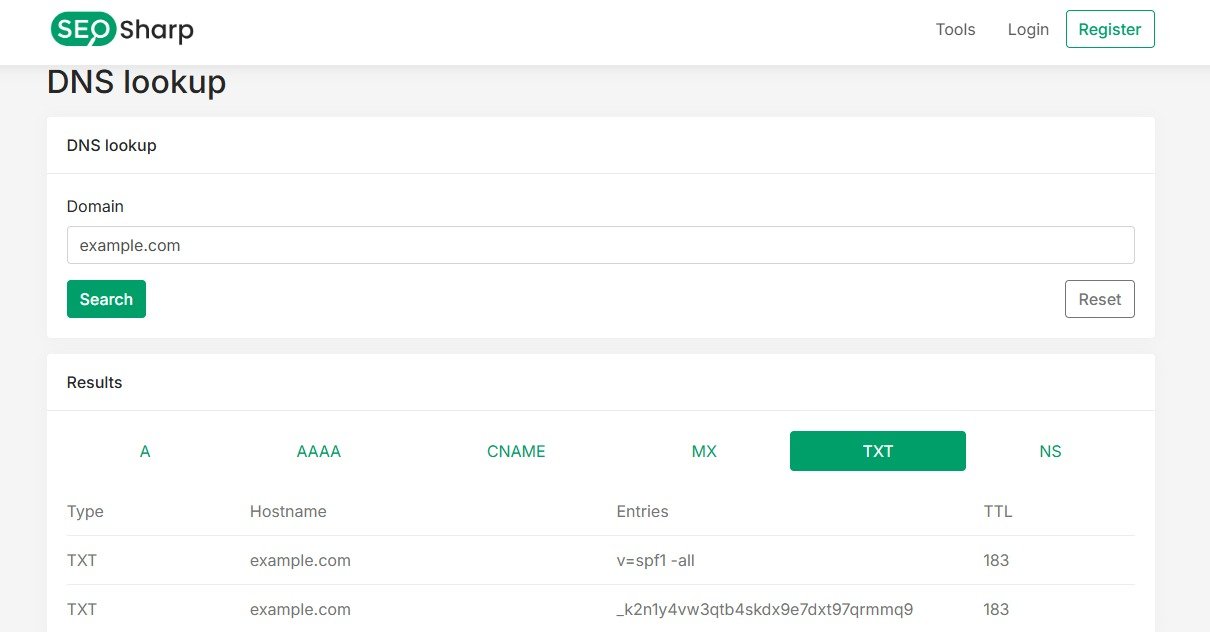
SEOSharp’s DNS Lookup Tool bridges this gap by presenting TXT records clearly while preserving technical accuracy. Users can instantly view all TXT records for a domain, understand which records relate to email security or verification and confirm whether changes are live.
This approach reduces dependency on multiple tools and eliminates misinterpretation. Understanding what each TXT record represents is more important than memorizing syntax. Once users can identify the purpose of a record, fixing issues becomes straightforward.
How Many Types of DNS TXT Records Exist and Why?
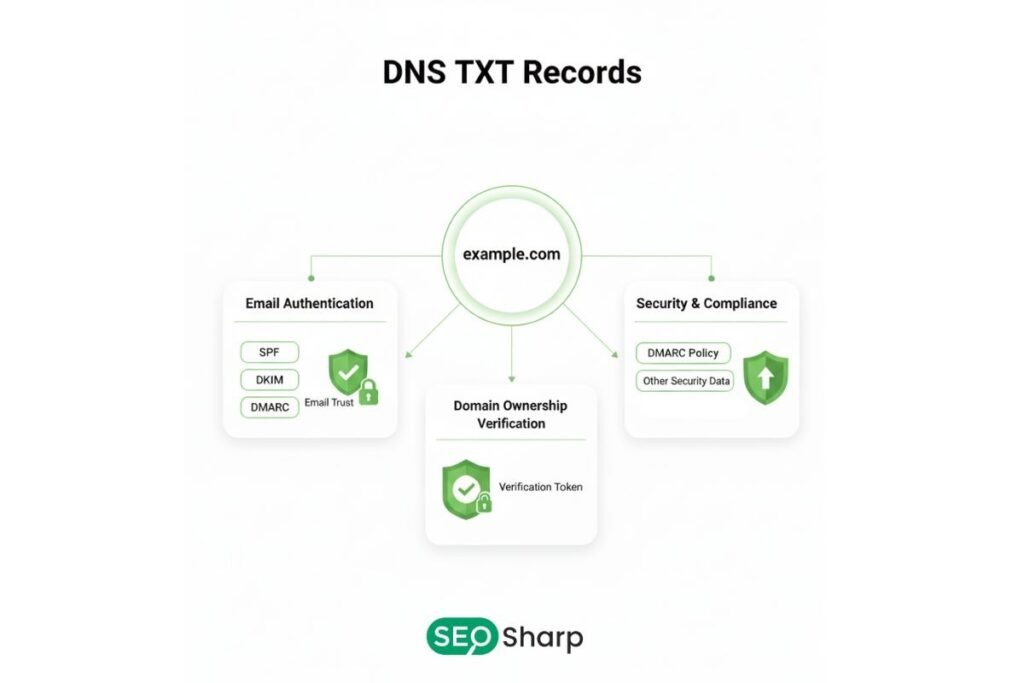
DNS TXT records are flexible by design which is why they are used for many different purposes rather than being limited to a single function. At the DNS level all TXT records are stored the same way but in practice they are categorized by how external systems interpret them.
Email related TXT records such as SPF DKIM and DMARC are the most widely used because email servers rely on them to verify sender authenticity and prevent spoofing. Without these records even legitimate emails can be flagged as suspicious or rejected entirely.
Beyond email TXT records are heavily used for domain ownership verification. Search engines, SaaS platforms, analytics tools and advertising networks often require a specific TXT value to confirm that you control a domain before activating features.
Security focused TXT records are also becoming more common especially for reporting compliance and trust validation. Understanding that TXT records serve different logical purposes helps prevent accidental deletion or misconfiguration during DNS cleanup or migrations.
How Does DNS TXT Lookup Help Improve Email Deliverability?
Email deliverability depends on trust and trust is largely established through DNS TXT records. When a receiving mail server gets an email it performs multiple checks using TXT records to confirm that the message is legitimate.
A DNS TXT lookup allows you to see whether your SPF rules correctly authorize sending servers, whether DKIM public keys are published properly and whether DMARC policies are aligned with your domain’s behavior.
When these records are missing or incorrect email failures rarely produce clear error messages. Messages may land in spam folders or disappear entirely.
DNS TXT lookup makes these hidden issues visible by showing exactly what email servers see when they check your domain.
This visibility allows you to correct problems before they damage sender reputation ensuring consistent delivery to inboxes across Gmail Outlook and enterprise email systems.
What Common Mistakes Do People Make With TXT Records?
One of the most common TXT record mistakes is publishing multiple SPF records instead of combining them into a single policy. DNS allows multiple TXT entries but email servers expect SPF rules to be consolidated and splitting them can break authentication.
Another frequent issue is copying verification values incorrectly such as adding extra quotation marks spaces or line breaks that invalidate the record.
Many users also delete TXT records without fully understanding their purpose especially during DNS migrations or cleanup. A record added years ago may still be required for email security or an active SaaS integration.
DNS TXT lookup helps prevent these mistakes by giving a complete view of all existing records allowing informed decisions rather than trial and error changes.
How Does DNS TXT Lookup Support SaaS and API Integrations?
Modern SaaS platforms and APIs rely heavily on DNS TXT records for secure onboarding and ongoing validation. Payment processors, CRM systems analytics tools and cloud services often require TXT verification before activating integrations.
If the record is missing or incorrect the integration remains inactive sometimes without clear feedback in the dashboard. DNS TXT lookup allows teams to confirm that verification records are published correctly and visible publicly.
This reduces onboarding delays avoids unnecessary support requests and ensures integrations work as expected from the start. For growing SaaS businesses, reliable DNS TXT lookup becomes a foundational step in scaling operations smoothly.
Why Is DNS TXT Lookup Important for SEO and Trust?
While TXT records are not direct ranking factors they strongly influence trust signals that affect SEO indirectly. Email reliability impacts brand communication which affects user trust and engagement.
Domain verification through TXT records ensures accurate ownership data in tools like Google Search Console analytics platforms and security services.
Search engines favor stable trustworthy domains with clean infrastructure. DNS TXT lookup helps maintain that stability by ensuring authentication and verification records are properly configured.
SEOSharp treats DNS health as part of a broader performance and trust strategy connecting technical accuracy with long-term search visibility and brand credibility.
How Can You Troubleshoot TXT Record Problems Step by Step?

Troubleshooting TXT records begins with visibility. DNS TXT lookup shows exactly which records are currently published and how they appear to external systems.
Once visible these records can be compared with expected values provided by email services SaaS platforms or security tools. This comparison quickly highlights missing duplicated or malformed entries.
The next challenge is propagation and caching. DNS changes do not update everywhere instantly which often causes confusion.
A reliable DNS TXT lookup tool helps distinguish between a real configuration issue and a temporary caching delay. This clarity allows confident troubleshooting instead of repeated changes that may worsen the problem.
Conclusion: Keep Your Domain Secure and Trusted With DNS TXT Lookup!
DNS TXT lookup is more than just a technical check, it is a fundamental tool to safeguard your domain, improve email deliverability, support SaaS integrations and maintain trust online.
Neglecting TXT records can lead to email failures, broken integrations or missed verification opportunities with third party services.
By routinely performing DNS TXT lookups you gain clarity over your domain’s configuration, quickly detect errors and prevent potential security or deliverability issues before they escalate.
SEOSharp’s DNS Lookup Tool is designed to make this process effortless offering accurate and up to date results that even beginners can understand.
With clear visibility into your TXT records you can confidently maintain domain health streamline SaaS onboarding and protect your digital communications.
What is DNS TXT lookup mainly used for?
DNS TXT lookup is primarily used to verify domain ownership, check email authentication records like SPF DKIM and DMARC and confirm that security or verification policies are published correctly for external services. It ensures that your domain communicates accurate information to the internet.
Can DNS TXT records affect email deliverability?
Yes, incorrect or missing TXT records can prevent email servers from authenticating messages causing emails to land in spam or be rejected. A proper DNS TXT lookup helps maintain smooth email flow and protects your domain reputation.
Are DNS TXT lookups safe to perform?
Absolutely. Performing a DNS TXT lookup is read-only. It only retrieves publicly available information about your domain and does not make any changes or affect the domain’s configuration.
How often should I check my DNS TXT records?
Regular checks are recommended especially after adding new services, changing email providers or updating security settings. Periodic DNS TXT lookups help identify issues early before they impact email deliverability or integrations.
Is it possible to add more than one TXT record to a single domain?
Yes you can have multiple TXT records but certain types like SPF should be consolidated into one record to avoid conflicts. DNS TXT lookup lets you verify all entries and ensures they are correctly formatted and functioning.
Do TXT records influence website SEO?
While TXT records don’t directly affect search rankings they improve trust, verify ownership and enable tools like Google Search Console. Correct TXT records contribute indirectly to domain authority and reliability which are essential for SEO.
How do I fix a DNS TXT record if it’s incorrect?
First identify the incorrect value with a DNS TXT lookup. Then update the record in your DNS provider’s dashboard and allow for propagation. Verification through a fresh lookup ensures the changes are correctly applied.