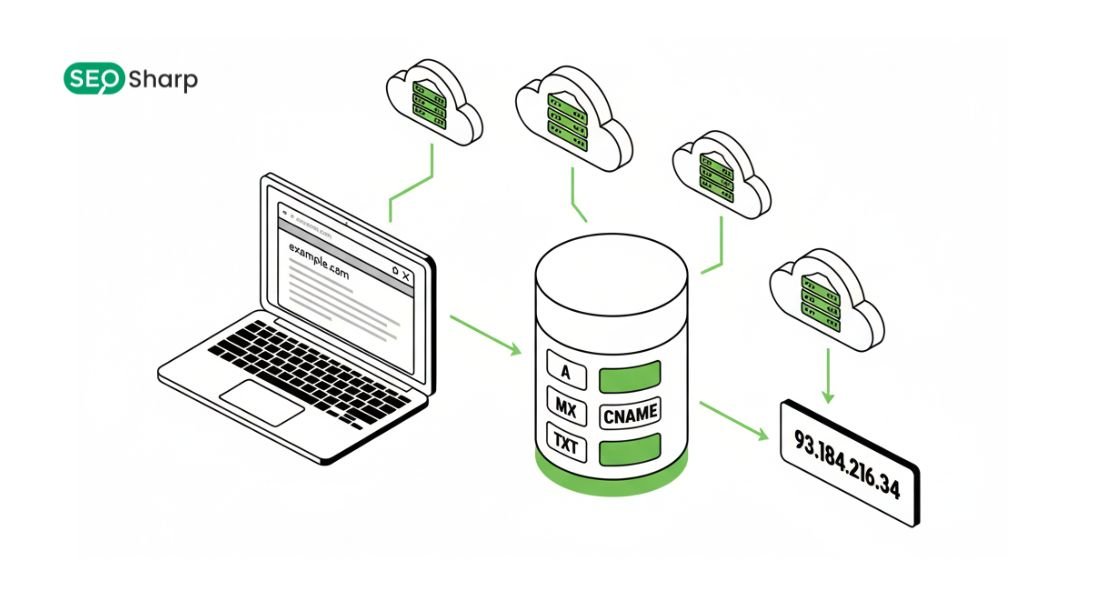
The Cloudflare DNS lookup process plays a crucial role in translating domain names into IP addresses and helping users connect with websites quickly and securely.
A DNS forward lookup zone is one of the core components of this process because it stores mappings that convert human readable domain names into machine readable IP addresses.
Understanding how Cloudflare manages DNS lookup operations and forward lookup zones helps website owners, network administrators and developers maintain better performance, reliability and security.
This guide explains how domain resolution functions, how Cloudflare accelerates DNS queries and how forward lookup zones organize domain records in real world DNS environments.
What is Cloudflare DNS Lookup and Why Does It Matters?
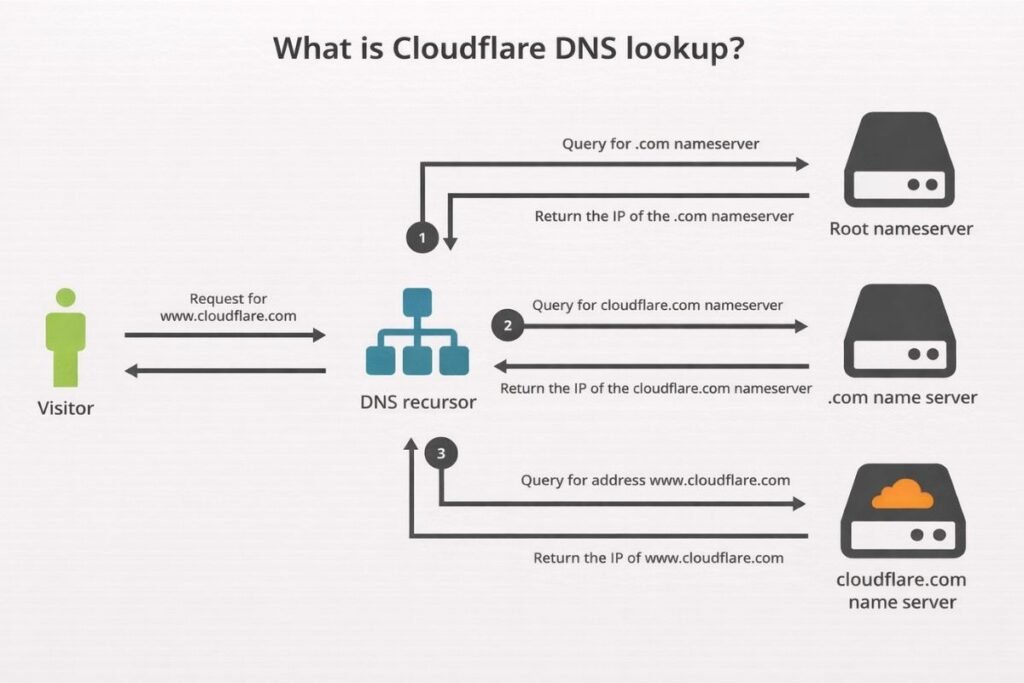
Cloudflare DNS lookup refers to the process of resolving domain names using Cloudflare’s global DNS infrastructure and recursive resolver services. When users type a domain into their browser Cloudflare’s distributed network instantly processes DNS queries and retrieves domain records from authoritative name servers.
This resolution process allows users to reach websites without remembering complex IP addresses. Cloudflare improves DNS lookup speed by operating one of the fastest public DNS resolvers through its 1.1.1.1 service.
This infrastructure reduces latency, improves website loading time and provides enhanced privacy protection. Cloudflare DNS lookup also helps organizations monitor domain configurations and troubleshoot resolution issues such as DNS Lookup failures which often occur when DNS records are misconfigured or servers become unreachable.
Cloudflare DNS lookup also plays an important role in verifying domain routing accuracy monitoring DNS propagation status and identifying missing DNS records that may cause website downtime or email delivery failures.
Businesses often rely on Cloudflare lookup tools to maintain stable online infrastructure and ensure consistent domain availability across global networks.
Understanding What a DNS Forward Lookup Zone Is
A DNS forward lookup zone is a DNS database that stores mappings between domain names and their corresponding IP addresses. It allows DNS servers to resolve domain names into IP addresses whenever users request access to a website or online service.
Forward lookup zones serve as the foundation of domain resolution and contain essential DNS records including A records AAAA records CNAME records and MX records.
These zones organize domain information hierarchically allowing administrators to manage domain records efficiently. When a DNS server receives a request it checks the forward lookup zone to determine which IP address is associated with a domain name.
Without forward lookup zones users would need to remember numerical IP addresses instead of simple domain names which would make internet navigation extremely difficult.
Why Does Cloudflare DNS Lookup Matters?
Cloudflare DNS lookup is valuable for both technical professionals and general website owners because it ensures domains resolve correctly across multiple geographic locations. It allows administrators to verify domain configuration, troubleshoot connectivity problems and monitor authentication records used in email security frameworks.
Reliable DNS lookup services also improve website performance by reducing latency and ensuring consistent server communication. Organizations frequently perform DNS lookup checks to detect propagation delays, incorrect IP mappings and authentication failures that may impact SEO performance and user experience.
How Cloudflare DNS Lookup Works Behind the Scenes?
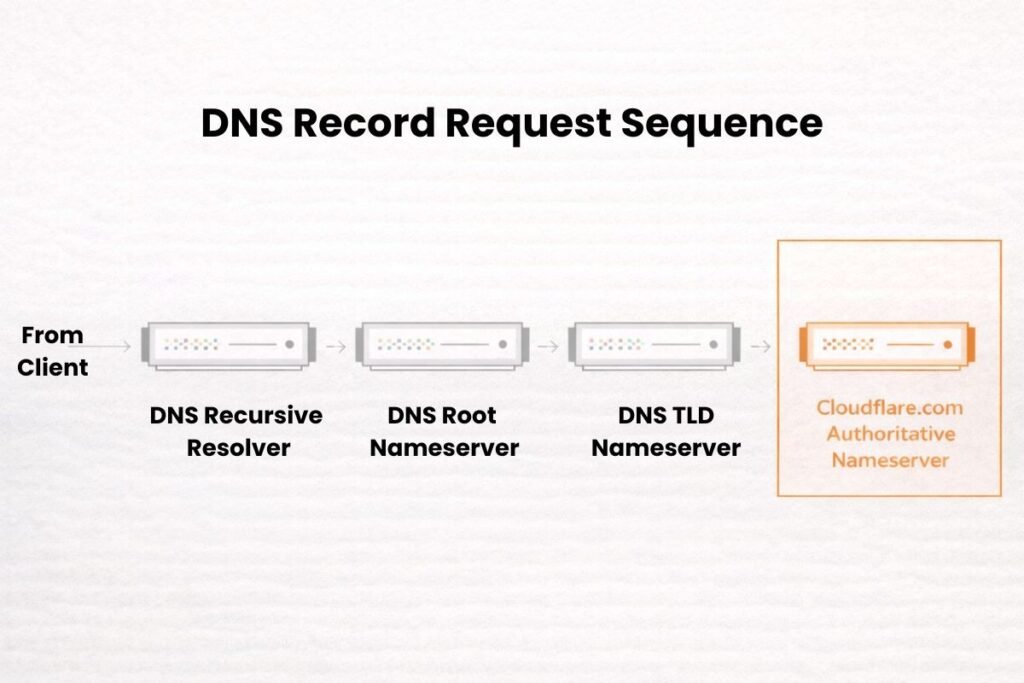
Cloudflare DNS lookup works through a high-performance global recursive resolver network designed to process domain queries within milliseconds. When users enter a domain name their device first checks local cache records.
If cached data is unavailable the request moves to the Internet Service Provider resolver and eventually reaches Cloudflare’s recursive DNS infrastructure.
Cloudflare then communicates with authoritative DNS servers to retrieve accurate domain mapping information. The retrieved records are cached and delivered to users through Cloudflare’s global edge network ensuring faster resolution speeds across different geographic regions.
The DNS lookup resolution chain involves multiple layers including caching servers, recursive resolvers and authoritative servers working together to provide reliable domain responses. Administrators often use tools like the DNS Lookup Flow Diagram Labelled representation to understand how these resolution stages interact during query processing.
Types of DNS Records in Cloudflare Lookup
Cloudflare DNS lookup reveals multiple DNS record types that control domain routing and communication between internet services. A records connect domain names to IPv4 addresses while AAAA records support modern networking by mapping domains to IPv6 addresses including configurations related to IPv6 Reverse DNS Lookup.
CNAME records create aliases that simplify domain routing by linking subdomains to canonical domains. MX records direct email communication by identifying mail server routing priorities while TXT records store authentication and verification information commonly validated through DNS TXT Lookup procedures.
SRV records manage service discovery and communication routing between network applications and are widely verified through DNS SRV Lookup operations. These DNS records work together to maintain stable domain connectivity and reliable service delivery.
Role of Forward Lookup Zones in Cloudflare DNS Infrastructure
Forward lookup zones play a central role in Cloudflare DNS management because they store domain records that guide users to correct servers. When website owners configure domains inside Cloudflare forward lookup zones organize DNS records into structured databases that simplify record management and domain routing.
Cloudflare forward lookup zones also allow administrators to configure TTL values which control how long DNS records remain cached across global networks.
Proper TTL configuration balances performance and update speed allowing websites to propagate DNS changes efficiently.
Forward lookup zones improve DNS reliability by preventing resolution conflicts and helping administrators maintain consistent server connectivity.
Cloudflare DNS Lookup Using 1.1.1.1 Resolver
Cloudflare provides a public recursive resolver known as 1.1.1.1 which is designed to deliver fast and private DNS query processing. This resolver helps users perform DNS lookups by querying authoritative DNS servers through encrypted DNS communication channels.
Users can configure 1.1.1.1 within operating system network settings, use it through command-line tools or access it through DNS lookup platforms.
The resolver improves security by preventing DNS tracking and spoofing attacks while delivering faster domain resolution across global networks.
How to Perform Cloudflare DNS Lookup Using Online Tools?
Users can perform Cloudflare DNS lookup by entering domain names into DNS lookup tools that query Cloudflare resolvers and authoritative servers.
These tools retrieve DNS records and display domain mapping information that helps administrators verify configurations and troubleshoot connectivity problems.
DNS lookup tools allow users to monitor domain performance, detect misconfigured records and confirm global DNS propagation behavior.
Professionals frequently use system utilities such as Windows DNS Lookup tools or Linux Lookup DNS commands to diagnose network issues and validate domain mapping.
Developers sometimes rely on Python DNS Lookup automation to monitor DNS records and perform bulk resolution checks.
Network administrators can also execute DNS Resolve Command queries through command line interfaces to verify domain resolution across different environments.
Methods to Perform Cloudflare DNS Lookup Using Command Line
Technical professionals often perform DNS lookup verification through command-line utilities that provide detailed DNS resolution insights. Tools such as nslookup and dig allow administrators to query Cloudflare DNS resolvers directly and verify specific DNS record types.
These utilities help diagnose domain routing problems, monitor propagation changes and confirm authoritative DNS responses across different network environments.
Importance of Authoritative and Recursive DNS in Lookup Processes
Cloudflare DNS lookup relies heavily on collaboration between authoritative DNS servers and recursive resolvers. Authoritative DNS servers store official domain mapping information and respond to queries with accurate DNS records.
Recursive resolvers act as intermediaries that retrieve records from authoritative servers and deliver them to users while caching responses for improved performance.
Cloudflare’s recursive resolver network reduces lookup latency by caching frequently requested domain records across distributed edge servers. This approach enhances website performance and reduces query load on authoritative servers.
Understanding resolver communication helps administrators perform advanced troubleshooting using commands such as Reverse DNS Lookup Command techniques that verify domain ownership and mapping accuracy.
Common DNS Lookup Challenges and Performance Issues
DNS lookup performance can be affected by caching delays propagation timing and incorrect record configurations. DNS caching temporarily stores domain mappings to improve performance but outdated cache data can cause resolution conflicts and accessibility errors.
Propagation delays occur when DNS updates take time to spread across global DNS servers depending on TTL settings and network distribution.
Network administrators often investigate resolution delays by studying propagation behavior and applying solutions similar to those explained in How to Fix Slow DNS Lookup troubleshooting strategies.
DNS errors can also appear when DNS servers fail to respond or when record conflicts exist. Understanding what DNS lookup failed means helps administrators identify whether issues originate from server downtime incorrect configurations or network communication failures.
Common DNS Lookup Errors and Fixes
DNS lookup errors such as NXDOMAIN SERVFAIL and timeout failures occur when domain records are missing servers are unreachable or resolver configurations are incorrect.
Administrators typically resolve these issues by verifying domain registration status, checking authoritative server responses and clearing outdated DNS cache data.
Monitoring propagation timing and validating DNS record accuracy helps maintain stable domain resolution and prevents service interruptions.
Security Benefits of Cloudflare DNS Lookup
Cloudflare DNS lookup strengthens internet security by protecting users from malicious domains and phishing attacks. Cloudflare monitors DNS traffic patterns and blocks suspicious queries using advanced threat detection algorithms.
DNS lookup services also support spam prevention systems such as DNS based blackhole lists that identify harmful email domains.
Organizations use Cloudflare DNS to implement authentication policies including SPF DKIM and domain verification mechanisms through TXT records.
Security teams often verify authentication records through DNS TXT Lookup validation to prevent email spoofing and maintain domain trust.
Cloudflare’s global infrastructure enhances security by providing encrypted DNS queries and reducing exposure to interception attacks.
Enterprise Network Management and DNS Lookup Optimization
Large organizations rely on DNS lookup optimization to maintain stable network communication and application performance. Network engineers sometimes configure routers and switches using commands like Disable DNS Lookup Cisco configurations to prevent unnecessary DNS query delays during device management sessions.
Enterprise administrators also manage DNS settings across network switches by implementing policies similar to how to disable DNS lookup on switch configurations.
Organizations frequently monitor DNS resolution performance across different environments to ensure domain stability and network reliability.
Administrators may also use techniques that explain How to Find My DNS Server to verify resolver configurations and ensure correct routing between network devices and external domain servers.
Reverse DNS and Domain Verification in Lookup Systems
While forward lookup zones convert domain names into IP addresses, reverse DNS resolution performs the opposite function by converting IP addresses into domain names. Reverse DNS helps verify server identity and supports email authentication and network security validation.
Administrators often learn how to lookup DNS names from IP addresses to confirm domain ownership and verify hosting configurations.
Cloudflare supports reverse resolution processes that complement forward lookup zones and improve overall domain verification accuracy. Reverse lookup is particularly important for monitoring email servers and preventing spam classification errors.
DNS Automation and Advanced Monitoring Techniques
Modern organizations automate DNS monitoring to ensure continuous domain availability and performance tracking. Developers frequently use Python DNS Lookup automation to monitor DNS record changes and validate propagation status. Automation helps reduce manual monitoring workload and ensures faster detection of DNS configuration errors.
System administrators also perform automated validation through scheduled scripts that test resolution consistency across different geographic locations. Automated DNS monitoring helps organizations maintain uptime reliability and supports large-scale infrastructure management.
Best Practices for Cloudflare DNS Lookup
Maintaining accurate DNS records, monitoring TTL values carefully and avoiding unnecessary record chaining improves DNS lookup performance and reliability. Organizations should regularly verify authentication records, test DNS updates before deployment and enable DNSSEC security protection to prevent spoofing attacks. Consistent monitoring ensures domains resolve correctly and maintain stable global accessibility.
Troubleshooting DNS Lookup Failures and Resolution Errors
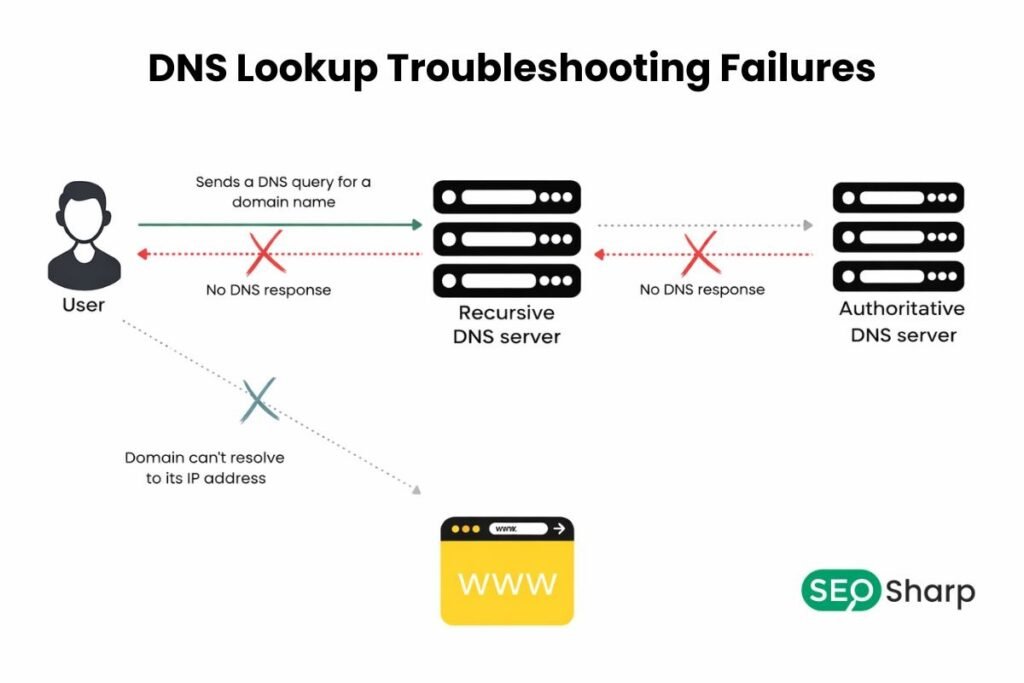
DNS lookup failures occur when DNS queries fail to retrieve valid domain mapping information. These failures can result from expired DNS records, incorrect IP mapping server outages or network connectivity issues.
usually investigate DNS lookup failed scenarios by verifying authoritative server responses, checking resolver configurations and monitoring propagation delays.
Troubleshooting also involves verifying service records using DNS SRV Lookup techniques and reviewing network routing configurations.
Operating system level diagnostic tools such as Windows DNS Lookup utilities provide valuable insights into resolution errors and connectivity problems. Understanding failure patterns helps administrators maintain consistent domain availability and prevent website downtime.
Conclusion
Cloudflare DNS lookup and forward lookup zones form the backbone of modern domain resolution by translating domain names into accurate IP addresses and ensuring reliable internet connectivity.
Understanding how DNS lookup works, how forward lookup zones store domain mappings and how Cloudflare optimizes resolution performance allows businesses to improve website speed stability and security.
Proper DNS configuration helps organizations avoid lookup failures, propagation delays and performance bottlenecks while maintaining smooth domain operations.
Platforms like SEOSharp not only provide a free DNS lookup tool but also offer in depth educational resources that help users understand domain resolution processes and troubleshoot DNS configurations effectively.
Using reliable DNS lookup tools and expert guidance helps website owners maintain high performance accurate domain routing and strong network reliability.
FAQs
How is Cloudflare DNS lookup different from standard DNS lookup services?
Cloudflare DNS lookup uses a globally distributed resolver network that improves speed privacy and security compared to traditional DNS resolvers operated by internet service providers.
Why do DNS changes take time to update globally?
DNS updates depend on TTL values and server propagation cycles which determine how quickly updated records spread across global DNS servers.
Can Cloudflare DNS lookup help diagnose website downtime?
Yes DNS lookup tools can identify record misconfigurations server mapping errors and propagation delays that may cause website accessibility issues.
Are forward lookup zones necessary for every domain?
Yes forward lookup zones store domain mapping information required for converting domain names into IP addresses and enabling website access.
Does Cloudflare DNS lookup improve website security?
Cloudflare protects DNS queries through encrypted resolution threat detection systems and authentication record monitoring to prevent malicious domain activity.